

Testing for HIV
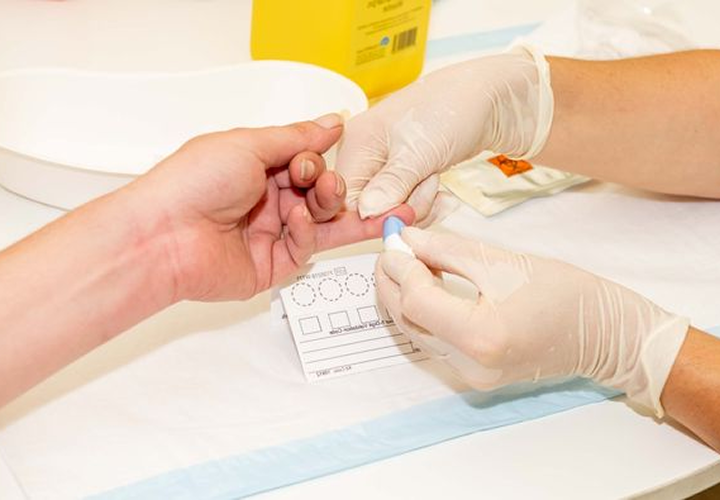
Who should get tested

Many people don’t know they have HIV. Anyone who thinks they have HIV should get tested. If you have never tested for HIV, there are many good reasons to test for HIV now.
You should get tested for HIV if you:
- are a man who has sex with other men
- have had more than one sexual partner and you didn’t always use a condom
- have a partner who is living with HIV
- have a partner who is living with HIV and you want to have a baby
- have had sex without a condom in a country where HIV is common
- have ever shared needles or other equipment to inject drugs
- have had injections, tattoos, piercings or medical procedures overseas and you are not sure that clean equipment was used.
Types of HIV tests
HIV blood test (HIV antibody test)
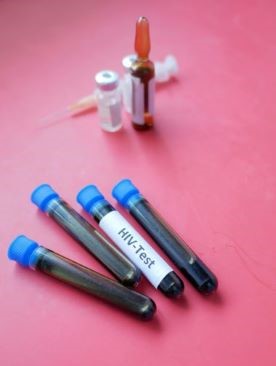
This is the most common type of test. Your doctor takes a blood sample and sends it to a laboratory to test for HIV. If your test shows HIV, the doctor will repeat the test to confirm the result.
The test is available for anyone who wants to test for HIV.
HIV self-test
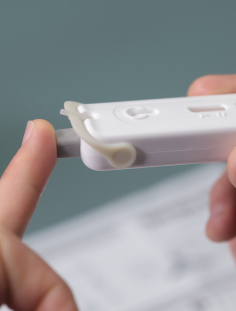
A small drop of blood from your finger is used to test for HIV. A result is ready in 30 minutes. There are three possible test results:
- Negative = there is no HIV
- Reactive = there is HIV. You will need to have an HIV blood test to confirm the result
- Invalid = the test didn’t work. You must do the test again.
There are several HIV self-testing options available. Find the best one for you in the next section.
Where can I get an HIV test?
HIV testing is easy and confidential.
If you have a Medicare card it is free. If you are a temporary visitor in NSW and don’t have a Medicare card, you might still be eligible for a free test from some of the following services.
 Dried Blood Spot testing at home
The Dried Blood Spot (DBS) HIV test is free and confidential. You order the test online and do it at home. You use the small needle provided in the test kit to collect a few drops of blood from your finger and send it to a laboratory for testing. You get the result in a week.
This is available for:
- men who have sex with men
- people from countries where HIV is common
- people with sexual partners from countries where HIV is common.
To get this test you must be over 16 years-of-age and live in NSW. You do not need a Medicare card.
Click here for more information about DBS in your language.
Watch the video to learn how to do a DBS test at home:

Arabic | Chinese | Indonesian | Thai | Vietnamese
 MyTest vending machines
You can choose to test your health in private with a free MyTest HIV self-test kit. MyTest HIV self-test kits can be collected from vending machines across NSW. Results are available in 15 minutes. Click here to find vending machine locations.
 Atomo HIV self test
It is a finger prick test which can be purchased online or from a chemist. Results are available in 15 minutes. For more information, visit Atomo HIV self test website.
 Rapid HIV testing centres
Rapid HIV community testing centres, called a[TEST], are for men who have sex with men only, and are free. A small drop of blood is taken from your finger and is used to test for HIV. The result is ready in 30 minutes.
Click here to find your nearest a[TEST] centre.
 Sexual Health Clinics
Testing for HIV at NSW Sexual Health Clinics is free. At some clinics you don’t need a Medicare card and don’t need to give your real name if you don’t want to.
For more information about which clinic is the best for you, call NSW Sexual Health Infolink (SHIL) on 1800 451 624.
If you prefer to speak in your own language, you can use the free interpreting service by calling the Translating and Interpreting Service (TIS) on 13 14 50 and ask them to connect you to SHIL.
 General Practitioners (GP)
Your doctor (GP) can give you an HIV blood test. This is the most common type of HIV test. Your doctor takes a blood sample and sends it to a laboratory to test for HIV. You may have to pay for the doctor’s time as well the cost of the blood test.
 Family Planning Clinics
Family Planning Clinics offer a range of reproductive and sexual health services, including testing and treatment for sexually transmissible infections (STIs), contraception information and procedures and pregnancy options counselling. You may have to pay for the cost of the service.
Click here to find a family planning clinic near you.
What if I test positive for HIV?
If you receive information that you have tested positive for HIV you may feel upset, angry, or confused. That is completely normal. Testing positive for HIV does not mean you have AIDS.
It is important to remember that HIV can be treated with HIV medicines and people with HIV can live long and healthy lives.
The first step after testing positive for HIV is to see your doctor (GP), even if you feel well.
The doctor will give you information about HIV and will do some more tests to make sure you are well and to help you make decisions about your HIV treatment.
In NSW, by law, you don’t need to tell someone that you have HIV before having sex if you take reasonable precautions to protect them from getting HIV. This can mean taking your treatment regularly and having an undetectable viral load.

 BACK
BACK